How Reliable Are Utilities on Vieques, Really?
This is one of the most common—and most important—questions buyers ask when they’re seriously considering property on Vieques. It usually comes up after a few showings, once the romance has settled and real life starts to enter the picture.
“Okay… be honest. How reliable are the utilities on Vieques, really?”
The honest answer is this: utilities on Vieques today are far more reliable than most people expect—especially compared to the island’s reputation from years past. At the same time, they are different from what many stateside buyers are used to, and understanding those differences is key to being happy here long-term.
The Big Picture: Vieques Is More Resilient Than It Used to Be
Over the past 25 years, utilities on Vieques have changed dramatically. Somewhat ironically, Hurricane Maria marked a turning point.
Post-storm rebuilding brought FEMA funding, infrastructure upgrades, and stronger systems across the island. In many day-to-day situations, Vieques now experiences more consistent utility service than some municipalities on mainland Puerto Rico.
That said, island living rewards familiarity. The longer people live here, the easier utilities become—not because problems disappear, but because homeowners learn how to manage them intelligently.
Electricity on Vieques: Stable, With Smart Backup Options
Electricity on Vieques is transmitted locally by LUMA Energy, with power generated on the mainland and delivered via an underwater cable to Vieques and onward to Culebra.
In day-to-day terms, power outages are infrequent and usually brief. Short interruptions—often 30 minutes or so—may happen every couple of months, while extended outages are rare outside of major weather events.
This is not a situation where electricity is unreliable week to week. In fact, many residents who travel frequently between Vieques and San Juan are surprised to find that power on Vieques is often more consistent.
As anywhere, island-wide outages can occur if there is a problem at a mainland generation plant, similar to ice storms or regional grid failures in the continental United States.
Backup Power: What Actually Works
After Maria, many homeowners added backup systems—not as a primary power source, but as insurance.
Over time, some clear patterns emerged. Diesel generators tend to perform best for extended outages, while gasoline and propane generators often struggle if run nonstop for days. Diesel is also easier to source post-storm and runs longer.
Solar and wind systems have also become increasingly popular. Solar makes obvious sense in the Caribbean, and the trade winds allow for small-scale wind generation. Battery systems—including lithium and Tesla-style options—are now widely available, and many homes operate grid-tied with battery backup or fully off-grid.
For most buyers, it ultimately becomes a math decision: comparing rising electricity costs with the long-term value of solar, wind, and storage.
A Critical Electricity Tip Most Buyers Don’t Hear: Voltage Fluctuations
While electricity delivery on Vieques is generally reliable, there is one important nuance that deserves honest attention: voltage fluctuation, sometimes referred to as brownouts.
This isn’t new, and it didn’t start with LUMA. Voltage instability has been part of Puerto Rico’s electrical reality for decades, well before privatization. What happens is not necessarily a full outage, but inconsistent voltage levels coming through the outlets—too high, too low, or fluctuating.
The issue isn’t lights going out. The issue is electronics.
Anything with a circuit board or internal computer—refrigerators, televisions, cable boxes, computers, printers, routers, microwaves—can be damaged over time by these fluctuations. Surge protectors help with spikes, but they do not protect against sustained low or unstable voltage.
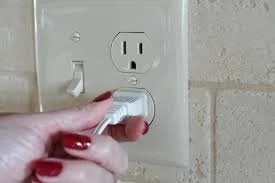
One of the most practical solutions—and one that has worked extremely well for years—is using voltage regulator boxes, sometimes called voltage protectors or voltage monitors.
These devices continuously monitor incoming voltage and allow power through only when it remains within a safe range. If voltage rises too high or drops too low, the device shuts off power and restores it once conditions stabilize.
They typically cost between $14 and $20 and are readily available at stores like Home Depot or Rogers Electric on the mainland.
A common setup is to plug the voltage regulator into the wall outlet, plug a standard surge protector into the regulator, and then connect sensitive electronics to the surge protector. This creates two layers of protection—voltage stability first, surge protection second.
Used this way, appliances are extremely well protected. Many long-time residents who take this approach report zero appliance failures, even while others experience repeated damage. It’s a small adjustment, but one that can easily save thousands of dollars over time.
There are also whole-house voltage regulation options that can be installed at the breaker panel, though those require consultation with a licensed electrician.
This is one of those issues that sounds alarming until you know how to manage it—and once you do, it largely disappears as a concern.
Water on Vieques: Reliable, With Smart Redundancy
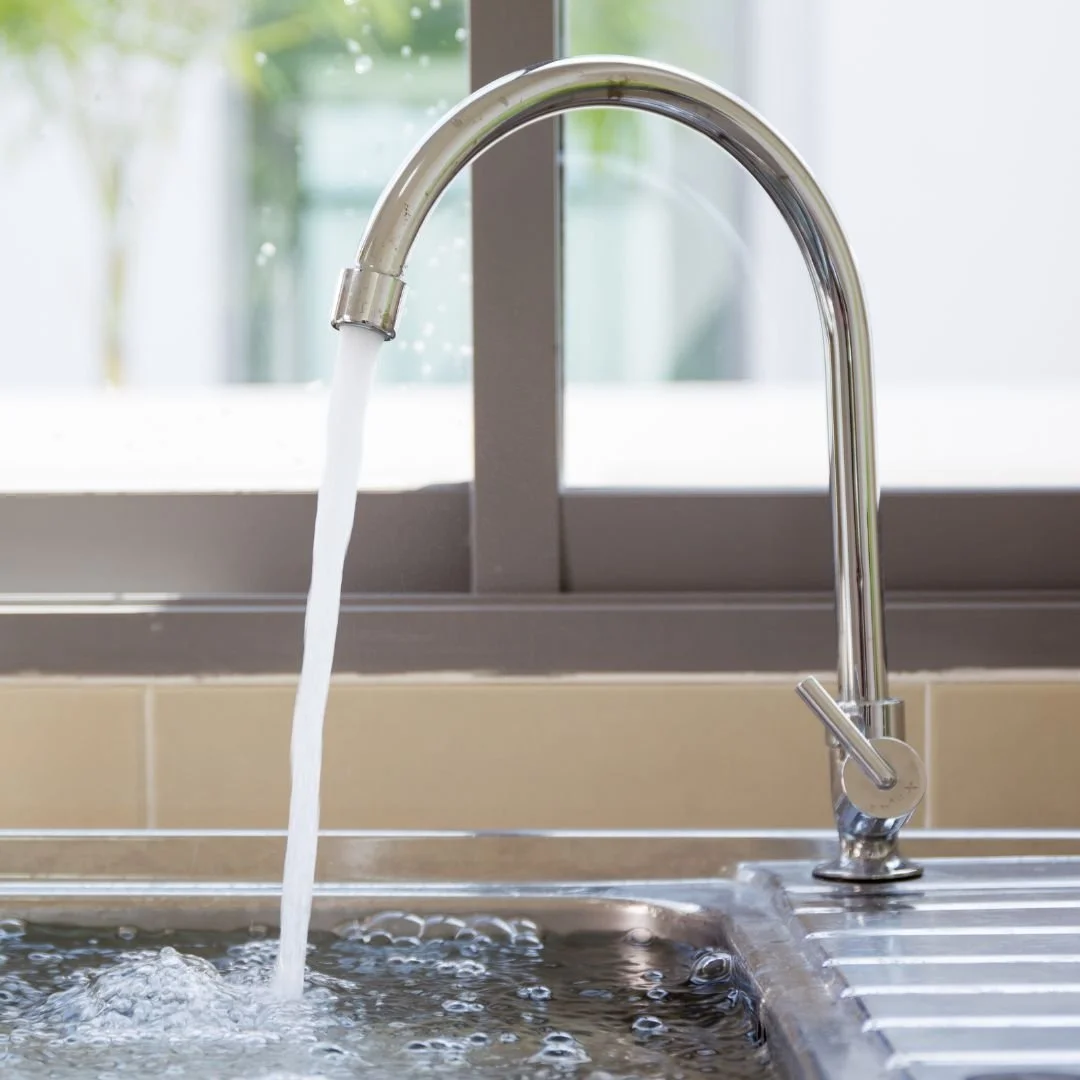
Water service on Vieques is supplied from mainland Puerto Rico, sourced from reservoirs fed by El Yunque’s rainforest system and delivered via underwater pipeline.
Even during and after Hurricane Maria, water was generally not a major issue on Vieques.
Most of the island has consistent water pressure. During peak demand periods—Christmas week and Semana Santa—some hilltop areas such as Monte Carmelo, Pilón, Los Chivos, and parts of La Llave may experience reduced pressure.
Because of this, many homes use cisterns fed by city water. Older homes often already have cistern infrastructure in place, and booster pumps are common in elevated neighborhoods.
Cisterns also allow homeowners to capture rainwater from rooftops, use stored water for gardens, and reduce reliance on municipal supply. Some newer homes even allow pools to double as emergency water storage.
A Note on Taste
One practical observation is that municipal water on Vieques can taste over-chlorinated. This does not indicate a safety issue, but many residents use simple carbon filters for drinking water or mix rainwater with city water in cisterns to reduce chlorine taste. It’s a small adjustment, but one people appreciate knowing in advance.
Cell Service on Vieques: Strong, With a Few Dead Spots
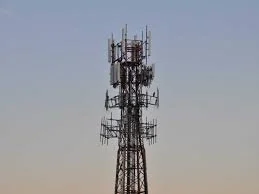
Vieques is served by three primary cell towers located in La Llave, Los Chivos, and near the CDT (hospital).
All major U.S. carriers work on Vieques, there are no international roaming issues, and service is generally strong across populated areas.
That said, a few known dead spots exist. Some outer beaches, such as parts of La Chiva and Punta Arenas, may have no signal, and a few short stretches of road temporarily drop service. Most residents simply learn where these areas are.
Compared to Vieques 20 or 30 years ago, cell service has transformed daily life and connectivity.
Internet on Vieques: Better Than Most Expect
Internet service on Vieques has improved dramatically.
Local providers such as Firefly offer fast, affordable point-to-point service that works extremely well for most households. Many residents also use Starlink, which has proven reliable, easy to install, and especially helpful for remote or off-grid homes.
Smartphones can function as reliable hotspots, many restaurants offer free Wi-Fi, and public Wi-Fi is available in Isabel Segunda’s plaza. For most people, working remotely from Vieques is not only possible—it’s routine.
The Honest Takeaway
Utilities on Vieques are reliable, but not invisible.
Life here works best when homeowners understand their systems, build in simple redundancy, and have a Plan B—and sometimes a Plan C. Once those plans are in place, day-to-day living feels remarkably normal, just with better views.
Thinking About Buying on Vieques?
If you’re evaluating homes and wondering how utilities factor into specific neighborhoods, construction styles, or property types, this is where local experience matters.
These are the kinds of small, practical details that don’t show up in listings—but make a big difference once you own here. And if you already live on Vieques and have your own utility tips or backup strategies, feel free to share them. Island living improves when knowledge is passed along.
La Roca
Bravos De Boston, Vieques

Isla Nena Scuba
Mambiche, Vieques

Esperanza Beachouse
Esperanza, Vieques