How Puerto Rico Loses a House is an occasional series exploring the less visible reasons homes disappear from Puerto Rico’s housing supply. Through real situations I’ve encountered working in real estate, I’ll look at how inheritance, unclear titles, financing, bureaucracy, abandonment and other complications can turn existing homes into properties that become increasingly difficult to sell, finance or even save.
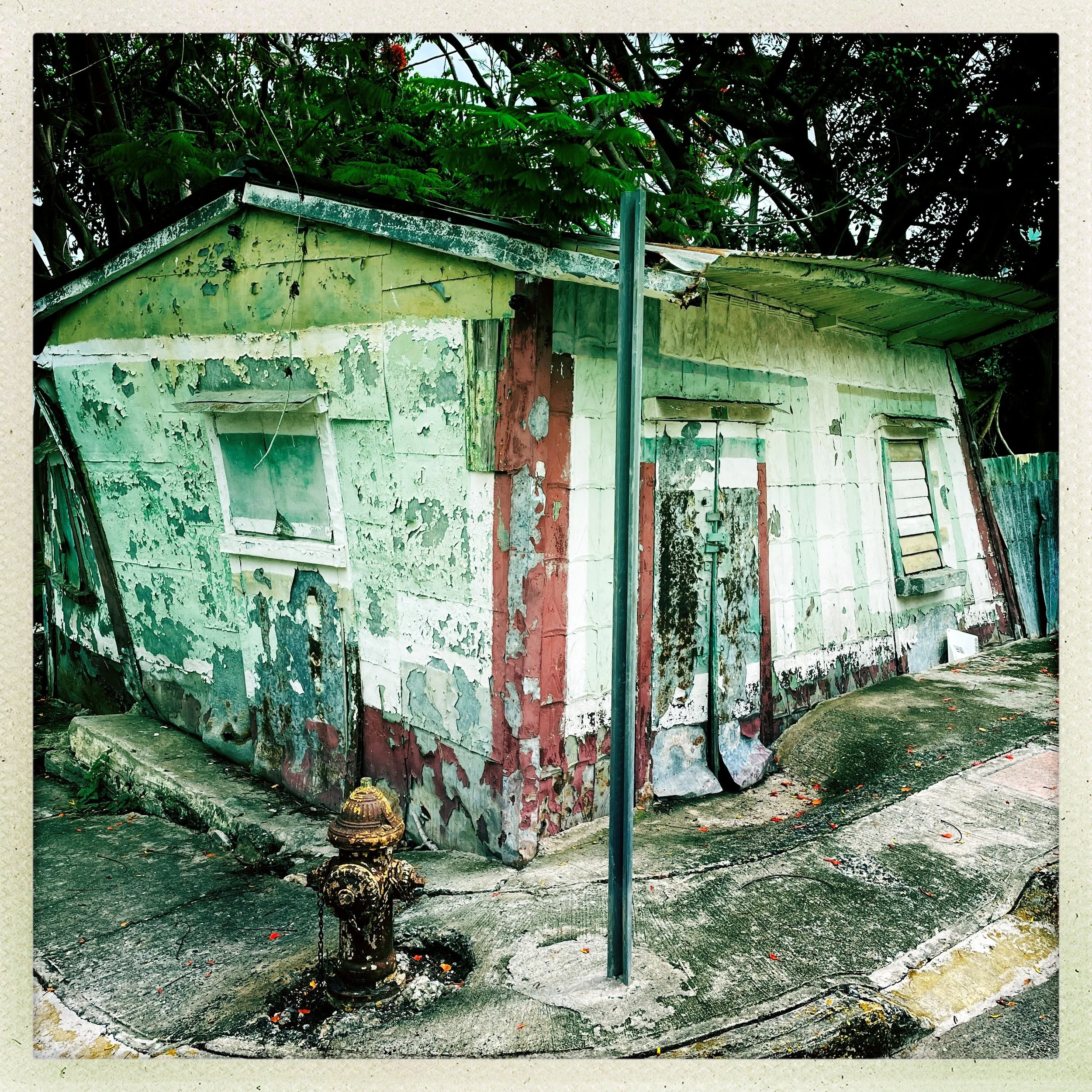
How Puerto Rico Loses a House
Part One: When Doing Nothing Becomes the Easiest Option
Puerto Rico has a housing problem. We hear a lot about rising prices, outside buyers, short-term rentals, gentrification and the need to build more affordable housing. Those are all conversations worth having, but as a real estate broker I sometimes see another part of the housing problem unfold one house at a time. This is the story of one of those houses.
Several years ago, a Vieques couple contacted me about selling their home. It was nothing extravagant, just a modest house on a small parcel in one of the island’s residential neighborhoods. It was the ideal home that a hard-working young, Viequense couple could afford. They weren't selling because an investor had offered them a fortune or because they wanted to cash in on rising real estate values. They needed to leave Vieques because one member of the couple was dealing with health issues and needed better access to medical care. Their plan was straightforward: sell the house and use the proceeds to purchase another home on the main island of Puerto Rico.
That alone is part of the housing story on Vieques. When access to healthcare, employment or other basic necessities makes it difficult for someone to remain in an island community, what happens to the house they leave behind? In this case, the answer should have been simple. They would sell it, another family would buy it, and the house would continue doing what it had done for decades: providing someone with a place to live.
But when we began reviewing the paperwork, we discovered a problem. The house had belonged to the parents of one member of the couple. Mom and Dad had died many years earlier, but their estate and the ownership of the property had never been formally settled. The family knew whose house it was, of course, and over the years they appear to have worked things out among themselves. One family member could live there for a while, another could use it later, and life continued. The house remained occupied and cared for. The paperwork, however, did not keep up with the family.
We arranged a meeting with the family's attorney in Fajardo. We traveled over from Vieques and joined several members of the family, and for the next couple of hours we began unraveling what would be necessary to establish clear ownership so the property could eventually be sold.
Mom and Dad had nine children, and by the time we were trying to straighten everything out, some of those children had died as well. Some family members still lived in Puerto Rico while others had moved to the States. Some of the deceased relatives had died in Puerto Rico while others had died somewhere in the continental United States. Death certificates would have to be located, heirs of deceased siblings would have to be identified, and people who had moved away years earlier would have to be found and contacted.
In at least one case, the family wasn't even certain where a relative had died. Some descendants were somewhere in the States, but their whereabouts weren't immediately known. One heir was in federal prison, and nobody in the family particularly wanted to deal with that person.
None of these obstacles necessarily made resolving the ownership impossible. Together, however, they made it exhausting.
The attorney patiently explained the process. Documents would have to be collected, relatives would have to be located, and family members outside Puerto Rico would have to cooperate. The interests of siblings who had subsequently died would have to be traced through another generation of heirs. There would be legal expenses, travel, phone calls, signatures and, most importantly, somebody in the family would have to take responsibility for pushing the entire process forward. There was another problem: money.
Families with modest properties don't necessarily have thousands of dollars sitting around to hire an attorney to resolve decades of accumulated inheritance issues. There are attorneys willing to take on situations like these and defer some of their compensation with the expectation that the property will eventually be sold and they can be paid from the proceeds at closing. They deserve credit for doing so, because they are essentially performing work today without knowing exactly when, or even whether, they will eventually be paid.
After discussing everything that would have to happen, however, we eventually arrived at the number that mattered most to the family. If the documents could be found, the heirs located, everyone cooperated, the legal issues were resolved and the house eventually sold, each sibling's share might amount to somewhere around $5,000. At that point, the family's decision became understandable. They decided to do nothing.
From the perspective of housing policy, that sounds like a terrible outcome. From the perspective of an individual family member, however, it can be completely rational. Would you spend months tracking down relatives you haven't spoken with in years, searching different states for death certificates, dealing with someone in federal prison whom nobody wants to contact, paying legal expenses and potentially navigating family disagreements when your reward at the end might be $5,000? Some people would, while plenty of people wouldn't, so the family left things as they were.
There is actually a happy twist to this particular story. I've passed the house since that meeting, and it has been painted and fixed up. Someone appears to be taking care of it, and I believe a family member still lives there. That's good news. A modest house that could have become another abandoned structure is still providing housing.
But as far as I know, the underlying ownership problem was never resolved. The family appears to have continued doing what families have sometimes done for generations: deciding among themselves who can use the house. That arrangement can work remarkably well. It can work for years, until it doesn't.
The next generation inherits interests from the current generation. Nine siblings become twenty cousins. Twenty cousins can become forty descendants scattered across Puerto Rico, Florida, New York, Pennsylvania and everywhere in between, who don’t know each other. People lose touch, documents disappear memories fade, and the person who always kept the family together dies. Eventually there may be nobody left with enough financial interest or emotional attachment to spend the time and money necessary to straighten everything out.
The house can still be standing. It can still have four walls and a roof. Someone might desperately need an affordable place to live. Yet the property can become increasingly difficult to sell, finance or make long-term decisions about because its legal ownership has become tangled across generations.
Eventually nobody fixes the roof or paints it. Nobody wants to spend $20,000 repairing a house they can't prove they own. The economics become worse with every passing year, while the number of people potentially involved becomes larger. And Puerto Rico loses another house.
The obvious question is whether there is a way to interrupt this process much earlier.
I don't know the answer. I'm a real estate broker, not a lawyer or a legislator, and inheritance and private-property rights are complicated for good reason. But sitting in that attorney's office in Fajardo made me wonder whether Puerto Rico waits too long before dealing with these problems.
Could the death of a property owner automatically trigger some type of notification or succession process? When a death certificate is issued and government agencies are notified of a person's death, could there also be a mechanism for identifying real property still registered in that person's name and notifying the family that something needs to be done? Could families be required, or at least strongly encouraged, to begin the process within a reasonable period rather than allowing decades to pass?
Perhaps the bigger obstacle is cost. If a modest house is worth relatively little and is divided among eight or nine heirs, paying thousands of dollars to resolve its ownership may make little economic sense to any one of them. Could Puerto Rico provide legal assistance for families trying to settle modest estates and preserve usable housing? Courts provide legal assistance in other circumstances when people cannot afford representation. Could some form of public or subsidized succession assistance prevent relatively inexpensive homes from becoming legally stranded?
Perhaps there should be a streamlined process specifically for modest properties with complicated inherited ownership. Perhaps the answer is education: making families understand that allowing everyone to informally "share" Mom and Dad's house may work today but can create an enormous problem for their children and grandchildren. Or perhaps there are already programs and legal mechanisms intended to address some of these situations, but families either don't know about them or find them too difficult to use. Those are questions for people who understand succession law and public policy far better than I do. But I think they are questions worth asking.
We talk constantly about creating affordable housing in Puerto Rico. We debate zoning, density, new construction, government subsidies, short-term rentals, outside investors and rising property values. All of those discussions have their place. But perhaps housing policy should also include something much more basic: keeping the houses we already have legally usable from one generation to the next.
I don't know exactly how many of Puerto Rico's abandoned homes have stories like this one behind them. That's something worth investigating. But after working in real estate here, I know this isn't the only one.
So when we talk about Puerto Rico's housing crisis, perhaps we need to broaden the conversation. Besides investigating if residents can afford houses and where additional housing should be built, we should also ask how many houses we already have that we're slowly allowing to disappear from the housing supply. And whether some of them could have been saved decades earlier with something as mundane as better paperwork.
Because sometimes Puerto Rico doesn't lose a house to a hurricane, a developer, an investor or a rising real estate market. Sometimes we lose it one death certificate, one unresolved inheritance and one generation at a time.
What could have been done differently?
If you’re familiar with Puerto Rico’s succession laws or have dealt with a similar situation in your own family, I’d like to hear from you. Is there a practical way to prevent a modest family home like this from becoming more legally complicated with each generation. And, more importantly, is there anything this particular family could still do today to resolve the problem before another generation inherits it?
Please share your experience or ideas in the comments below.